

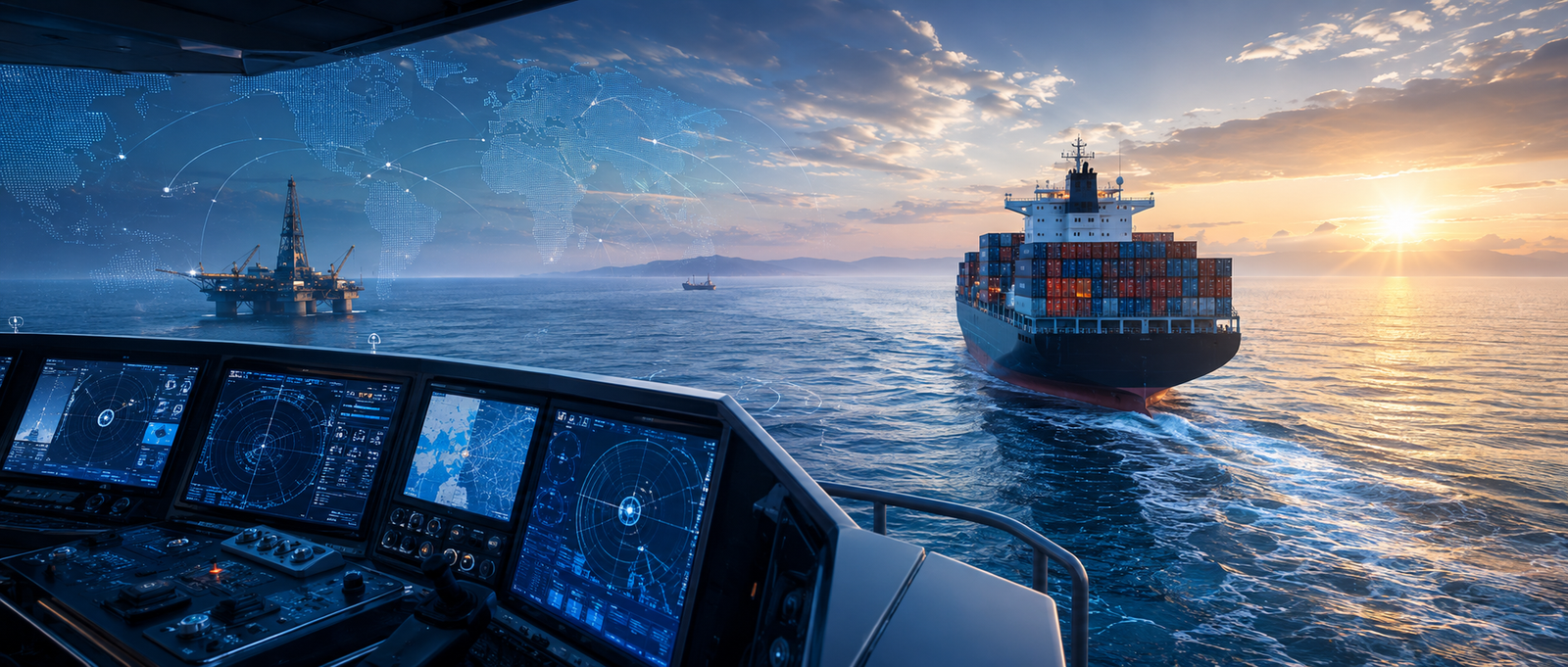
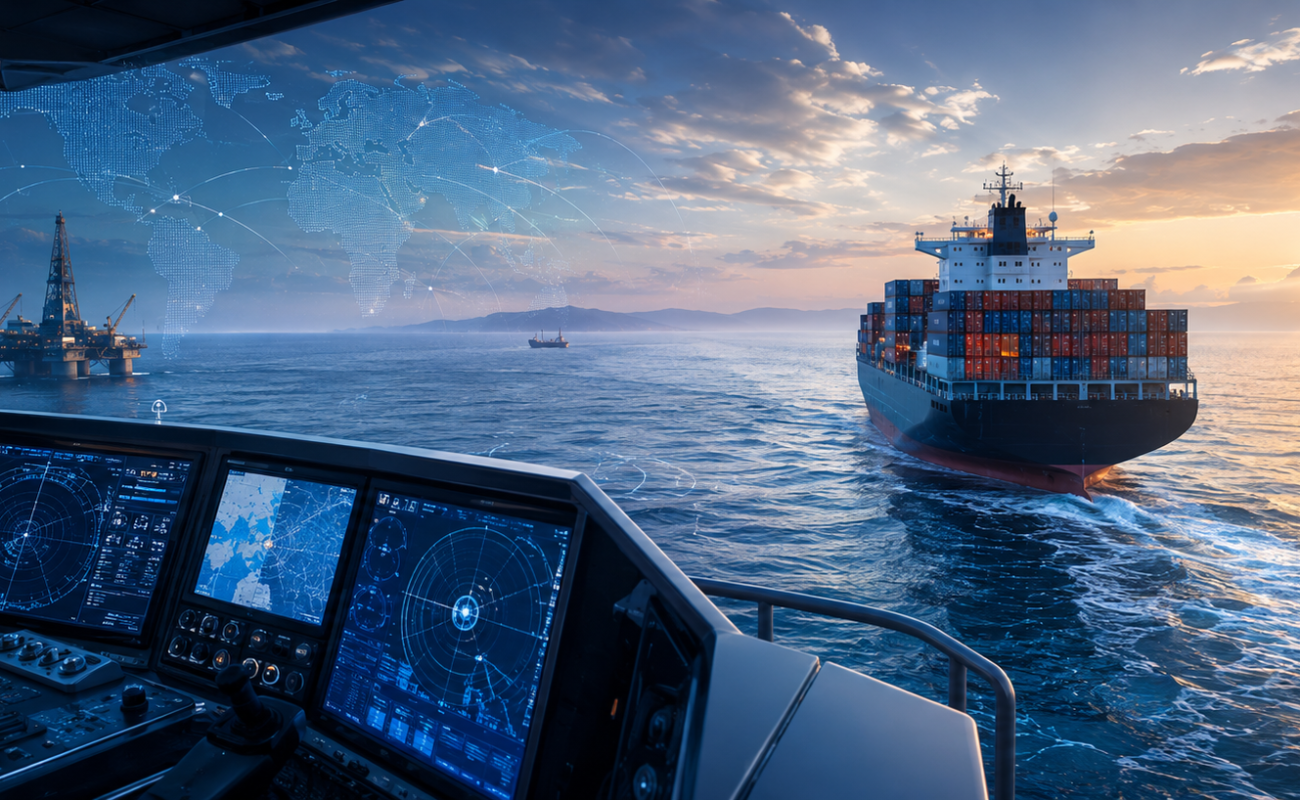
Safe navigation is one of the most important responsibilities on any vessel. Modern ships operate in busy waterways, open oceans, ports, and challenging weather conditions. To manage these environments effectively, vessels rely on a range of advanced navigation systems that provide information about position, direction, speed, surrounding traffic, depth, and potential hazards.
Modern vessel navigation is no longer dependent on a single instrument. Instead, several systems work together to provide navigators with a complete picture of the vessel’s surroundings.
One of the most fundamental technologies is the Global Navigation Satellite System, commonly known through systems such as GPS and other GNSS constellations. These systems provide accurate positioning information that helps navigators determine the vessel’s location and monitor its movement.
Radar is another essential navigation technology. Marine radar uses radio waves to detect objects around a vessel. It can help identify other ships, land, buoys, structures, and certain weather conditions. Radar is particularly valuable during poor visibility, at night, or in situations where visual observation is limited.
Automatic Identification System, or AIS, provides another layer of situational awareness. AIS allows vessels to exchange important information such as identification, position, course, speed, and other operational data. When displayed on compatible navigation equipment, this information can help crews understand traffic patterns and assess potential collision situations.
Electronic Chart Display and Information System, or ECDIS, has become an important component of modern bridge operations. ECDIS allows navigators to use approved electronic navigational charts and monitor the vessel’s planned route. It can provide useful information about water depths, hazards, navigation marks, and other charted features.
Gyrocompasses and heading sensors also play a major role. Accurate heading information is required for navigation, radar operation, autopilot systems, and other onboard equipment. Reliable heading data allows the crew to understand the vessel’s direction and maintain an intended course.
Depth sounders provide information about the water beneath the vessel. Monitoring water depth is particularly important when operating in coastal waters, channels, ports, and areas with changing seabed conditions. Modern systems can provide continuous depth information to assist navigators in maintaining safe clearance.
Communication systems are closely connected with navigation operations. VHF marine radios, satellite communication equipment, GMDSS equipment, and other communication technologies allow vessels to exchange information with other ships, coastal stations, ports, and emergency services.
Modern navigation bridges increasingly bring these systems together. Integrated bridge systems can display information from different sensors and equipment in a centralized environment. This reduces the need for navigators to monitor completely separate instruments and can improve situational awareness.
However, advanced technology does not remove the need for professional navigation skills. Equipment can experience faults, sensors can provide incorrect information, and electronic systems can be affected by power failures or communication problems. For this reason, crews must understand both the capabilities and limitations of navigation systems.
Regular maintenance is also essential. Navigation equipment should be inspected, tested, calibrated, and serviced according to manufacturer recommendations and applicable maritime requirements. Software and electronic chart information should also be kept appropriately updated.
Another growing area is remote monitoring and digital connectivity. Shore-based teams can increasingly receive operational information from vessels, allowing companies to monitor equipment, analyze performance, and support crews. This can improve maintenance planning and operational decision-making.
Cybersecurity is becoming equally important as navigation systems become more interconnected. Protecting onboard networks and equipment from unauthorized access or malicious activity is now an important part of modern maritime technology management.
The goal of modern vessel navigation systems is simple: provide reliable information that helps crews make safe and informed decisions.
At Baomaritech, our focus is on marine technology and equipment solutions that support safe, reliable, and efficient vessel operations. By combining dependable equipment with professional service and technical support, we help maritime operators prepare their vessels for the demands of modern navigation.